Finishing
←
Types of Finishing Products
Explore our diverse range of specialty chemical categories, each designed
to provide unique solutions and enhanced performance characteristics.
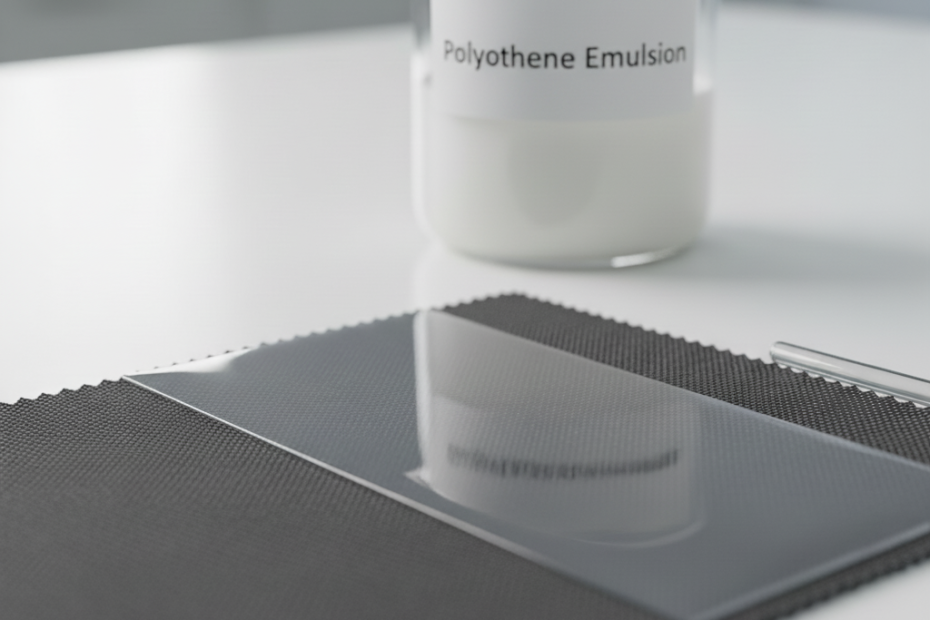
Ployethylene Emulsion
Polyethylene emulsions create thin, waxy coatings on fabrics that reduce friction and improves tear strength and sewability during garment manufacturing. This lubrication layer allows needles to penetrate smoothly without heat buildup or thread damage, enabling higher production speeds with fewer defects. The coating also provides smooth, soft hand-feel to finished textiles.
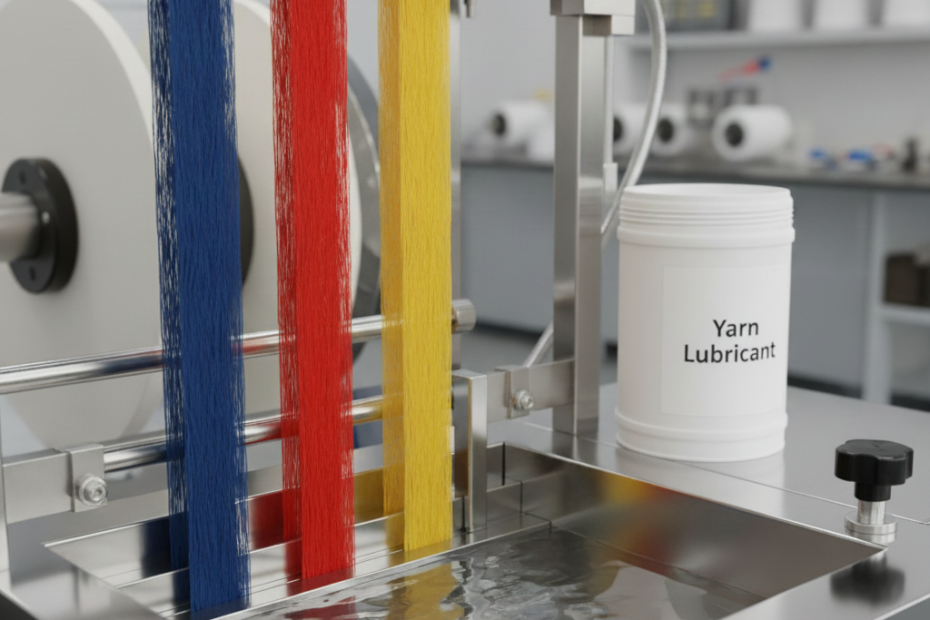
Yarn Lubricants
Yarn lubricants reduce friction during textile manufacturing by coating fibers with slippery films that facilitate smooth movement through knitting and weaving equipment. This lubrication prevents yarn breakage, minimizes heat buildup, and enables higher production speeds while maintaining quality. The lubricant layer protects yarns from mechanical stress as they pass through guides, needles, and tension devices, reducing both fiber damage and machine wear. Formulations are tailored to specific processes and fiber types, with options for temporary lubricants that wash out or durable treatments that persist through subsequent processing stages.
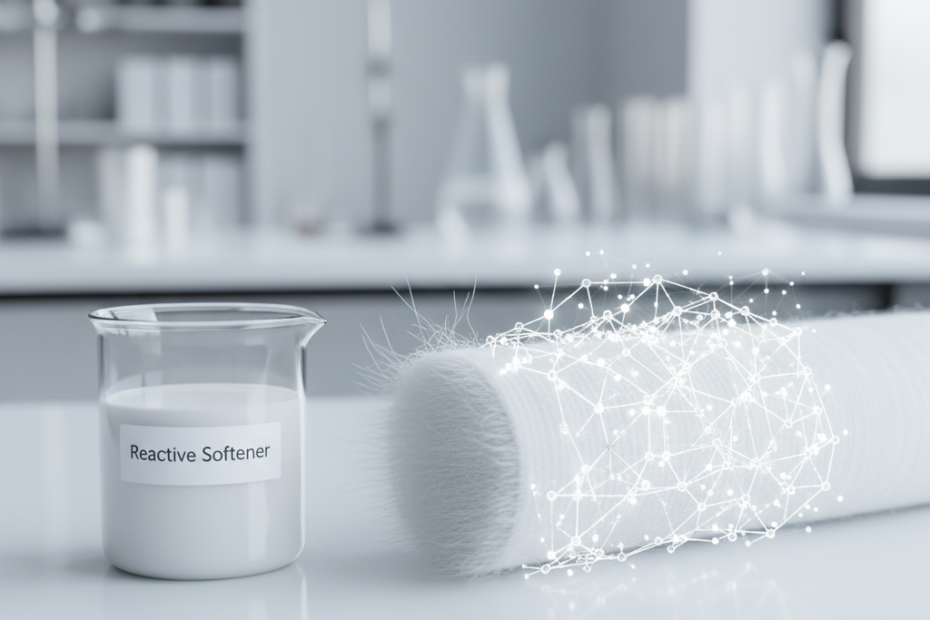
Reactive Softener
Reactive softeners gives softness by forming chemical bonds with fiber molecules rather than simply coating surfaces. Their reactive groups link covalently to hydroxyl or amino sites in the fiber structure during curing.
Nonionic Softener
Nonionic softeners gives softness ensuring compatibility with all finishing chemicals and eliminating yellowing risks on sensitive fabrics. They provide gentle softening while maintaining fabric absorbency, making them ideal for towels, medical textiles, and materials treated with optical brighteners. Nonionic softeners are preferred when compatibility, absorbency retention, and shade stability are priorities.
Cationic Softener
The cationic chemistry makes these softeners particularly effective on cellulosic fibers where negative surface charges are abundant. They deliver multifunctional benefits, though careful selection is needed to avoid potential yellowing on sensitive materials or under certain processing conditions.
Blooming Agent
Blooming Agent is a finishing chemical used to enhance fabric appearance by improving softness, fullness, and surface bloom. It gives textiles a richer hand feel and a visually enhanced, premium finish after processing.
Resins
Resins chemically cross-link cellulose fibers to provide wrinkle resistance, dimensional stability, and durable press properties. They form covalent bridges between adjacent cellulose molecules during heat curing, restricting fiber movement and preventing the creasing that occurs with moisture and mechanical stress. This transformation enables cotton and other cellulosics to maintain smooth, crisp appearance through laundering without ironing. Resin formulations must balance cross-link density to achieve adequate wrinkle recovery while minimizing the strength loss and stiffness that excessive cross-linking can cause.
Stiffening Agent
Stiffening agents increase fabric firmness and body by coating fibers or creating bonds that restrict flexibility and enhance structural rigidity. They deposit polymers that fill interfibrillar spaces and limit fiber movement, transforming soft textiles into materials with defined shape retention and crisp hand-feel. The stiffening level can be adjusted from light body enhancement to substantial rigidity depending on application needs. Formulations are available as temporary treatments that wash out after use or permanent finishes that maintain stiffness through repeated laundering, suitable for everything from garment components to technical textiles requiring dimensional stability.
Silicone Softener
Silicone softeners provide superior smoothness and durability compared to conventional softening agents through deposition of silicone polymer films on fiber surfaces. These create ultra-low friction coatings that deliver luxurious slippery hand-feel and excellent drape characteristics that persist through extensive laundering. The silicone’s strong fiber adhesion and chemical stability ensure wash durability far exceeding fatty acid or simple cationic types. Additional benefits include reduced pilling, mild water repellency, and enhanced fabric flow, making silicone softeners the premium choice for high-quality textiles where exceptional tactile properties are required.
Sizing
Sizing is essentially a protective coating applied to yarns before weaving that makes them strong enough to survive the mechanical stress of looms running at high speeds. Without sizing, yarns would break constantly from the friction and tension, causing production slowdowns and fabric defects. The sizing film lubricates the yarn surface, binds loose fibers together, and adds temporary strength that gets the material through weaving successfully. Depending on the application, sizing either washes out during fabric preparation or stays in to add body and stiffness to the finished textile.
Need Custom Chemical Solutions?
Our specialty chemicals team can develop custom formulations and
innovative solutions for your unique requirements.
About
Leading manufacturer of high-quality chemical products, serving industries worldwide with excellence and innovation.